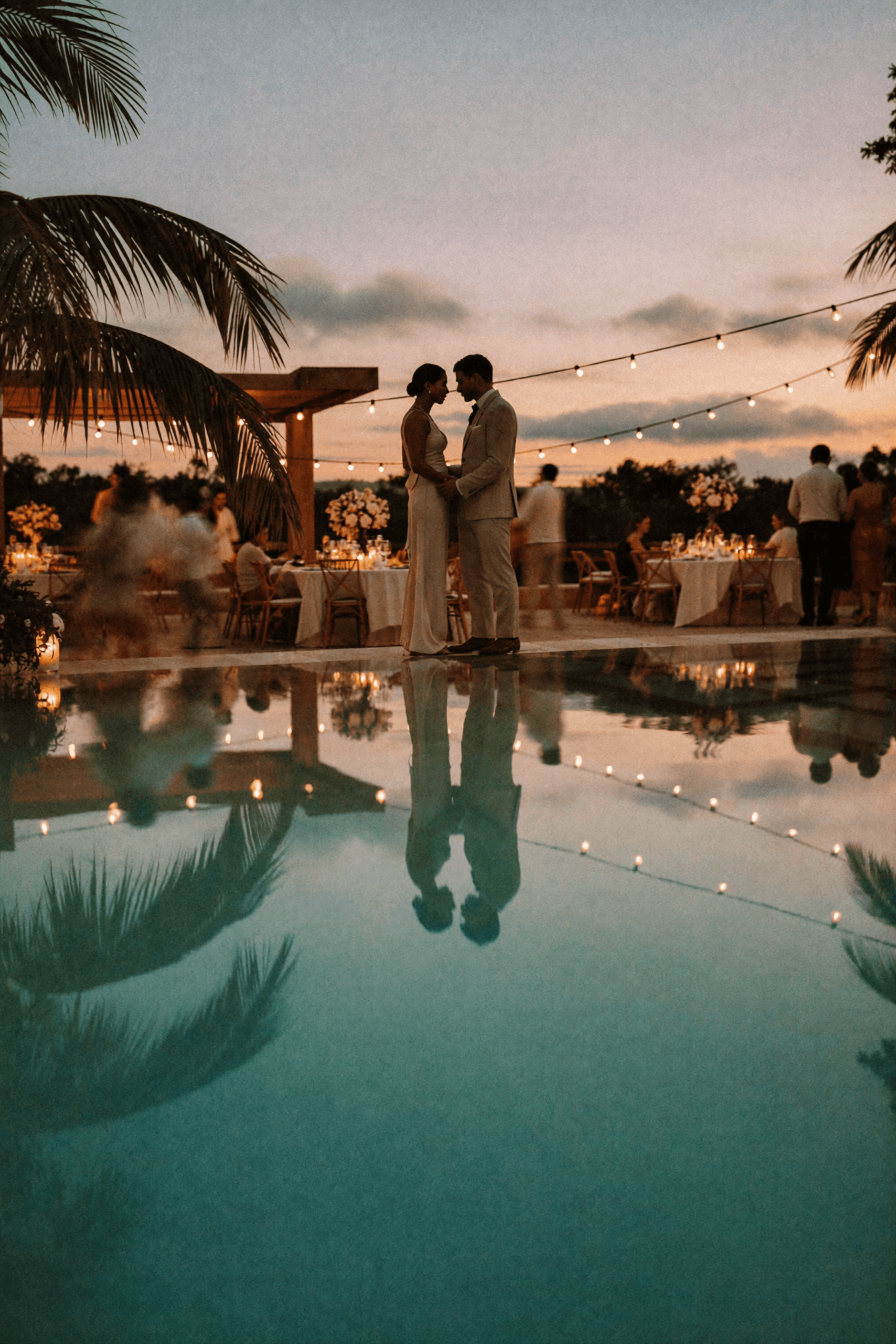
The first thing you notice about Medellín is how the light sits differently here. Not the flat equatorial glare you might expect from a city two degrees above the latitude of the Sahara, but something softer — diffuse, mountain-filtered, arriving at angles that flatter faces in a way that makes photographers refer to the Aburrá Valley as something close to a natural studio. Medellín earned its nickname, La Ciudad de la Eterna Primavera, for its temperature — 22 to 25°C year-round — but the more accurate gift is its light.
I have photographed weddings on four continents and in more cities than I can keep a tidy list of. Medellín is the one I keep returning to not because I am based here, but because the work it produces is consistently among the best in my portfolio. The photographs look like they should not have been easy to make. They were.

What Makes Medellín Different for Wedding Photography
Most destination wedding cities offer one or two photographic environments — the courtyard, the beach, the vineyard. Medellín offers a dozen, all within forty minutes of each other. Colonial haciendas and fincas in the surrounding municipios. The botanical gardens in the centre of the city. The rooftops of El Poblado with the valley lights beginning at dusk. The misty mountaintop villages of Santa Elena where flower farms turn the hillsides into colour. And connecting all of it: the city's famous Metro Cable, which rises through neighbourhoods stacked on the hillsides and delivers photographers to vantage points that no other city in the world can offer.
The diversity is the point. A wedding day in Medellín gives a photographer the kind of visual range that normally requires travelling between cities. The same couple, the same day: stone courtyards at noon, cable car silhouettes at dusk, valley lights at midnight.


The Venues Worth Knowing
Hacienda Pozo Chico is the name I mention first to anyone asking about Colombian wedding venues. Located roughly forty-five minutes from the centre, it offers what fincas outside the city have always offered: stone archways, cobblestone courtyards, tropical foliage, and that particular quality of colonial architecture that absorbs afternoon light rather than reflecting it. The surrounding Andean mountains are visible from most parts of the property. At golden hour, the valley below fills with a warm gradient that requires nothing from a photographer but patience.


The Botanical Garden of Medellín is a different proposition: fourteen hectares in the middle of the city, multiple photographic zones within walking distance of each other. The Orquideorama — a latticed canopy structure built among the orchids — produces some of the most striking architectural light in Colombia. The Japanese garden with its koi ponds works in morning, when mist still hangs in the valley. The central lake photographs beautifully at every hour, but blue hour is something specifically worth scheduling around.
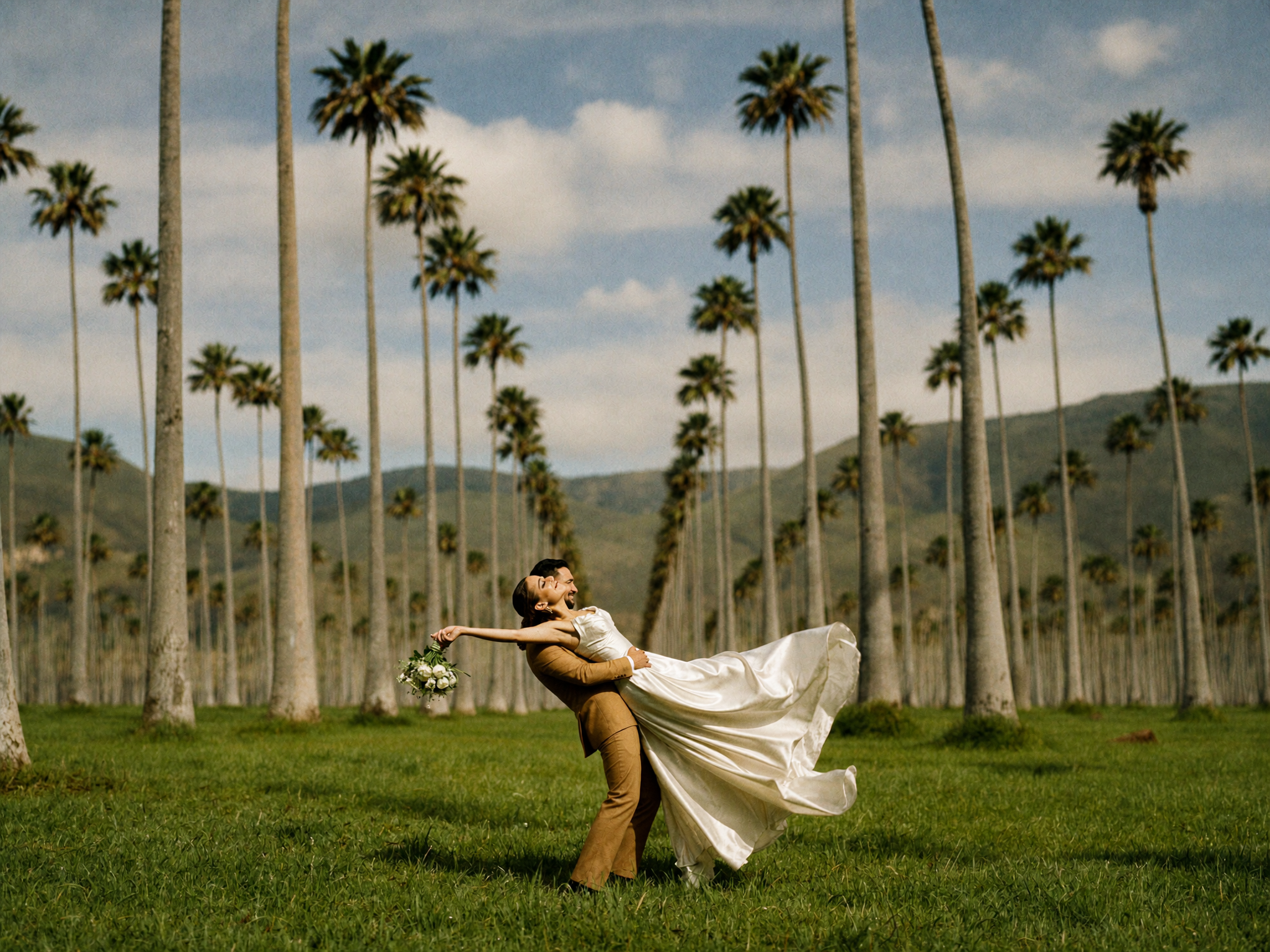
El Poblado rooftops reward couples drawn to contemporary settings. As the city lights come on at dusk, the valley becomes a bowl of warm illumination with the Andes holding it in from every side. The view from a high rooftop in El Poblado at sunset is arguably the most dramatic urban backdrop available anywhere in South America.

The Catedral Basílica Metropolitana, with its neoclassical scale and stained-glass interior, serves couples who want the weight of a traditional Catholic ceremony. Interior light is at its best in late afternoon when it arrives horizontal through the windows. The cathedral closes mid-afternoon but reopens for the 6pm mass.

Zona E in Rionegro — twenty-five minutes from the city — is the venue choice for couples who want multiple visual environments in one property. Casa Bali, Marrakech, the Green House: three distinctly styled spaces, up to three hundred guests, all set in a lush tropical estate in the hills above Medellín. Enough visual range that no two moments in the album would look the same.


Weather, Seasons, and When to Book
Medellín operates on two seasons, neither of them extreme. The drier months — December through March and July through August — bring clearer skies and reliable golden hours. The wetter months — April through June and September through November — bring rain that typically falls in the afternoon, leaving mornings clean and workable. The landscape during the wet season is extraordinary: the hills around the city turn a particular shade of saturated green that does not exist during the dry months.
A morning ceremony during the wet season will almost certainly have usable outdoor light. An outdoor cocktail hour at 4pm in October requires a covered backup. The rain is not dramatic — it is predictable, which is actually more useful than dramatic.

March stands out as the single best month. The dry season is ending, the landscape is still green from previous rains, tourist numbers have not yet peaked, and the quality of light is extraordinary. June through August is the second-best window — lush vegetation, roughly seventy percent sunshine, and school holidays that make international guest travel easier. December brings the clearest skies but also the highest prices and the most competition for venue availability.
Medellín's famous Flower Festival falls in August — the city fills with floral displays, the Silleteros parade carries elaborate flower arrangements through the streets, and the photographic context for a wedding during festival week is unlike anything available in any other month of the year.
Golden Hour in Medellín
Sunset in Medellín lands between 5:50 and 6:15pm throughout the year, varying less than twenty-five minutes across all twelve months. In cities at higher latitudes, golden hour shifts dramatically by season. In Medellín, if you know the ceremony ends by 4:45pm, you have a predictable couple-portrait window every single month.
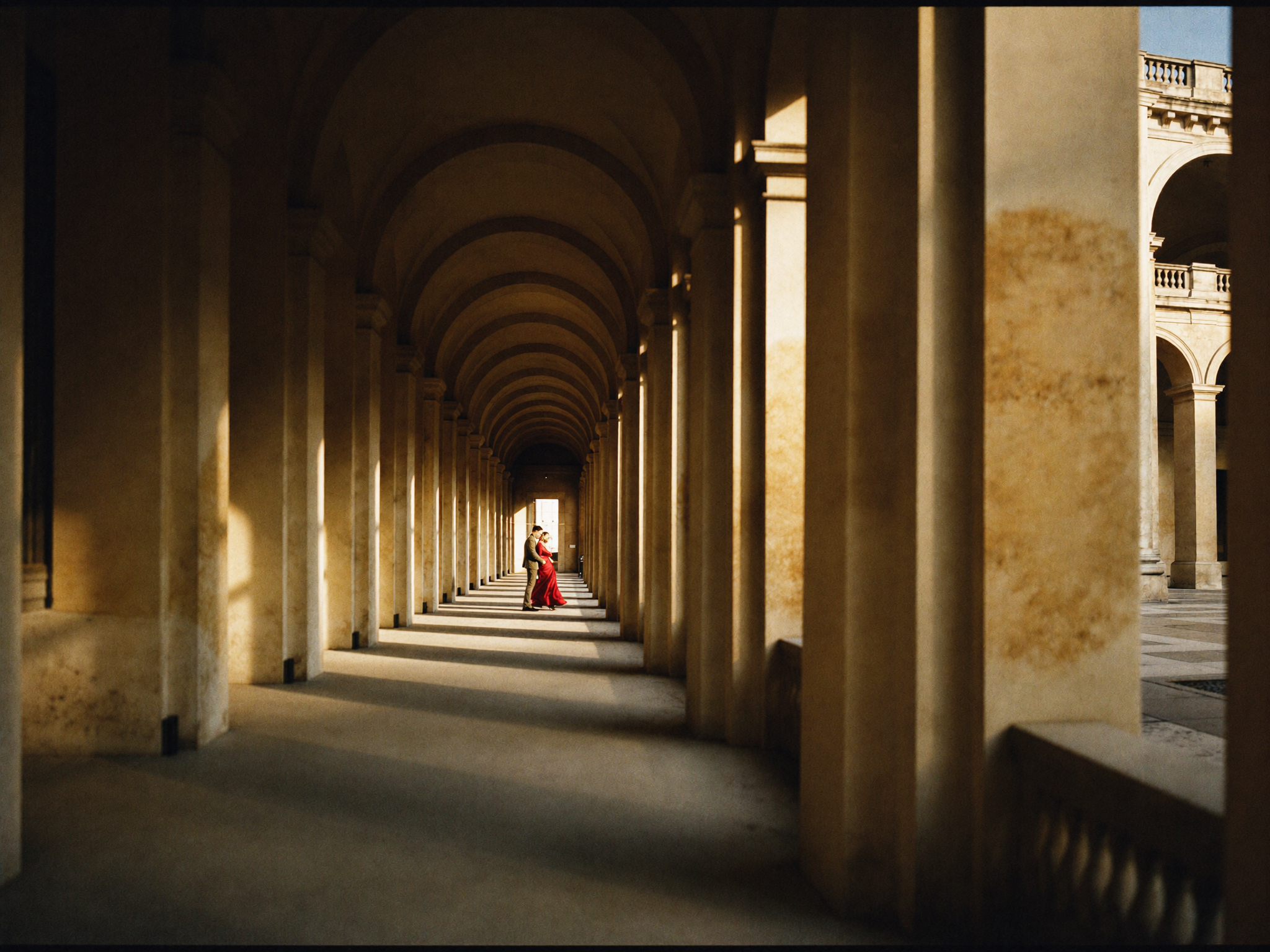
My standard recommendation: ceremony ends by 4:30 to 4:45pm. Family portraits from 4:45 to 5:30pm. Couple portraits from 5:30pm until the light is gone. The valley's geography extends it slightly further: because the city sits inside a bowl of mountains, the sun descends behind the western ridge before it technically sets, creating a diffused post-golden glow that is softer than golden hour itself but warm, consistent, and forgiving. It is a phenomenon specific to Medellín's topography and one I actively build timelines around.
Colombian Wedding Traditions
International couples marrying in Medellín should understand the traditions they're walking into — both because they are worth participating in and because they create specific photographic moments worth preparing for.
The padrinos y madrinas — wedding godparents — play a ceremonial role with no direct equivalent in Western traditions. These are chosen advisors who participate visibly; photographically, they expand the cast of key subjects and create relationship dynamics that produce genuine, unposed expressions.
Las arras — thirteen gold coins exchanged between the couple during the ceremony — is a ritual that rewards a close lens and patient timing. A photographer who does not know to expect it will miss it entirely. La Hora Loca, which begins when the formal reception transitions to dancing, brings costumes, props, high-energy music, and a rapid shift in the room's visual temperature.


Medellín receptions do not end at ten. They end when they end, which is often closer to midnight or beyond. The photographs from the final hours — when everyone has stopped performing and started actually celebrating — are frequently the most honest images of the entire day.
What a Medellín Wedding Actually Costs
For international couples accustomed to Western wedding pricing, Medellín represents significant value without representing a compromise on quality.
Wedding photography from a professional local photographer runs $800–$1,500 USD for a full twelve-hour day. Venue rental ranges from roughly $1,800 USD for the Botanical Garden to $4,500 USD for a premium hacienda. Rooftop venues in El Poblado sit between $1,500–$3,000 USD. Zona E in Rionegro starts around $3,000 USD for the venue. For a fifty to eighty-person wedding — venue, photography, catering, florals, coordination — the total typically lands between $14,000–$25,000 USD. The lower end of what a comparable wedding in the United States would cost is around $36,000 USD. The overlap does not exist.


A bilingual wedding planner with established vendor relationships is not optional for international couples. It is what makes the rest of the budget work. Their fees typically run $1,800–$4,900 USD — a fraction of what they save in avoided mistakes and miscommunication. Some vendors in Medellín do not accept international payment apps and require a local coordinator to manage deposits. This is not bureaucracy; it is infrastructure.
What to Expect as an International Couple
Colombians take hospitality seriously in a way that feels ceremonial. The guests at a Medellín wedding are not attendees; they are participants. Extended family networks mean larger guest counts than international couples might expect, and the energy of a room full of Colombians who consider dancing a social obligation produces photographs that look like no other wedding I shoot anywhere else.


Dress codes skew formal. Female guests wear colour; black is historically associated with mourning and tends to be avoided. Male guests at traditional events often wear guayabera suits. International guests should receive clear guidance about expectations before they book their flights.
Language logistics require planning. Spanish is the working language of every vendor conversation, contract, and ceremony detail. A bilingual coordinator is not a preference; it is infrastructure.
The photography, in the end, transcends the language. The light is the same in Spanish as in English. The ceremony carries the same visual weight regardless of whether you understand the words being spoken. This is why destination weddings work — and why Medellín works as a destination wedding city. The images need no translation.
Destination Wedding Photographer
Vancouver · Medellín · Worldwide


